Dating • Data study
The True Cost of Dating Apps in 2026
Everyone knows dating apps cost something. Almost nobody adds up the whole bill — the subscription, the upsells, the auto-renewals, and the hundreds of hours that never show up on a statement. So we did the math for 2026. The subscription turns out to be the least honest number attached to it.
TL;DR — Key takeaways
- The biggest cost isn't money. At 51 minutes a day, dating apps eat ~310 hours a year — nearly 13 full days, or about a month of eight-hour workdays.
- The paywall climbs fast. Basic premium is ~$16/mo across Tinder, Bumble and Hinge; the top tiers ($40–$50/mo) now cost more than Netflix, Spotify and Disney+ combined.
- A realistic year runs ~$392 for one app done right, ~$1,080 for the three-app 'numbers game' — before you count the time.
- Spend far less: test free tiers first, pay annually not monthly, never run more than one premium app, cancel through the App Store, and put money into photos before boosts.
Everyone knows dating apps cost something. What almost nobody does is add up the whole bill — the subscription, the upsells, the auto-renewals, and the hundreds of hours that never show up on a credit-card statement.
So we did the math for 2026. We pulled current subscription pricing for the three biggest apps, layered in the industry's own usage data, and calculated what a single year of active app dating actually costs a typical user. The subscription is the small part. The rest is where it gets uncomfortable.
Here's the short version: the sticker price of a dating app is the least honest number attached to it.
The number most people get wrong: 310 hours a year
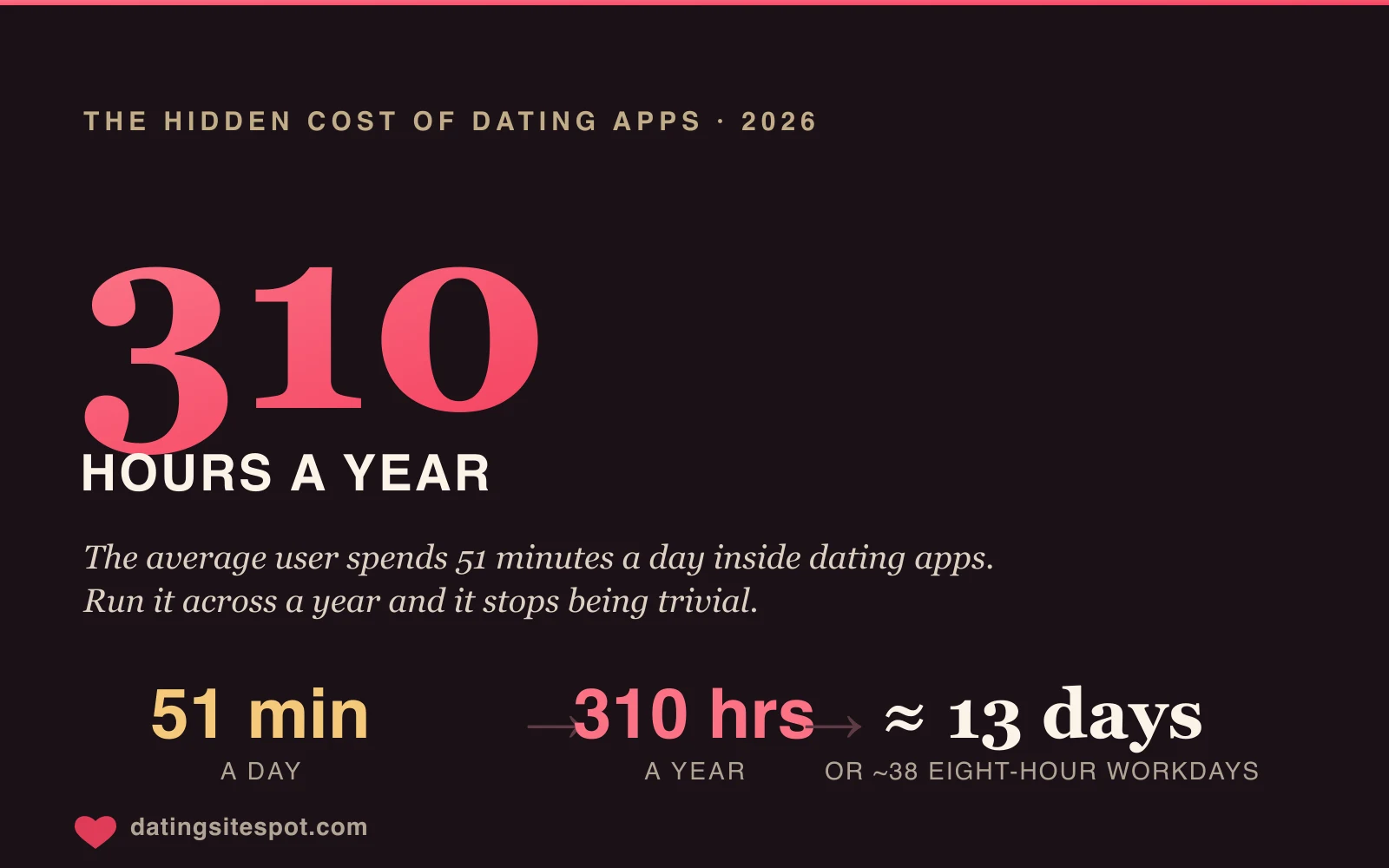
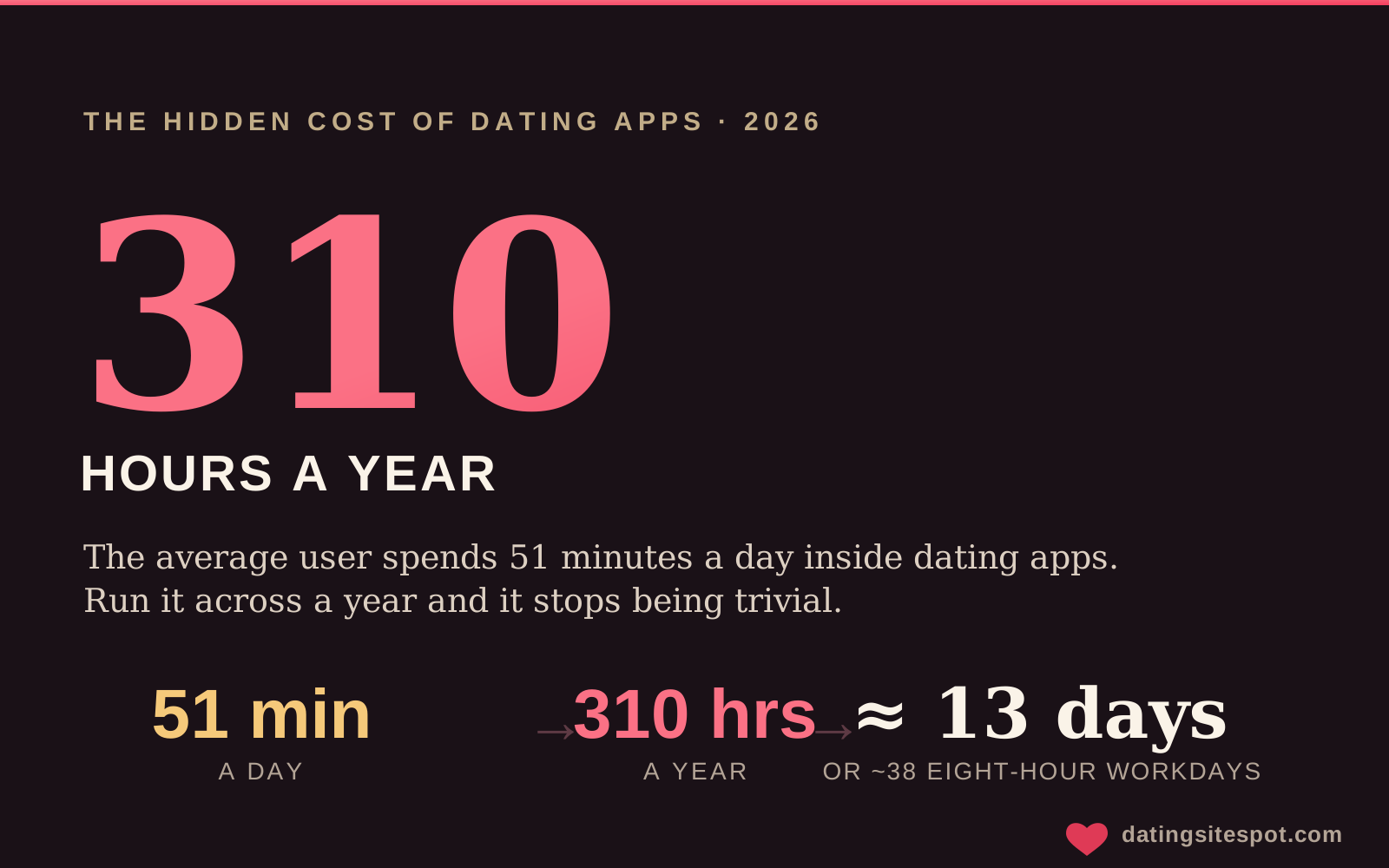 The average user spends 51 minutes a day inside dating apps — about 310 hours a year, or nearly 13 full days.
Start with the cost that isn't money.
According to a 2024 Forbes Health survey, the average dating-app user spends roughly 51 minutes per day inside these apps. That figure has been remarkably stable across sources. Fifty-one minutes a day doesn't sound like much — it's less than a sitcom episode.
Run it across a full year and it stops being trivial. Fifty-one minutes a day is about 310 hours a year. That's nearly 13 full 24-hour days, or if you count it as waking working days, closer to 38 eight-hour workdays — most of a full-time month spent swiping, messaging, and re-reading the same three conversations that are going nowhere.
Women log slightly more than men (about 52 minutes a day versus 49, per Statista). Active Tinder users open the app around four times a day. Whatever the exact split, the headline holds: the biggest cost of a dating app is measured in hours, not dollars, and it's roughly a month of your year.
If your time is worth even €15 an hour, that 310 hours is a notional €4,650 a year in opportunity cost — before you've paid for a single subscription.
The money, tier by tier (2026 US pricing)
Now the part that shows up on your card. Dating-app pricing is deliberately messy — the apps price-discriminate by age, location, and even how often you use them, so two people can pay wildly different amounts for the same tier in the same month. The figures below reflect typical 2026 US pricing for users in the 25–35 range, verified against app-store listings.
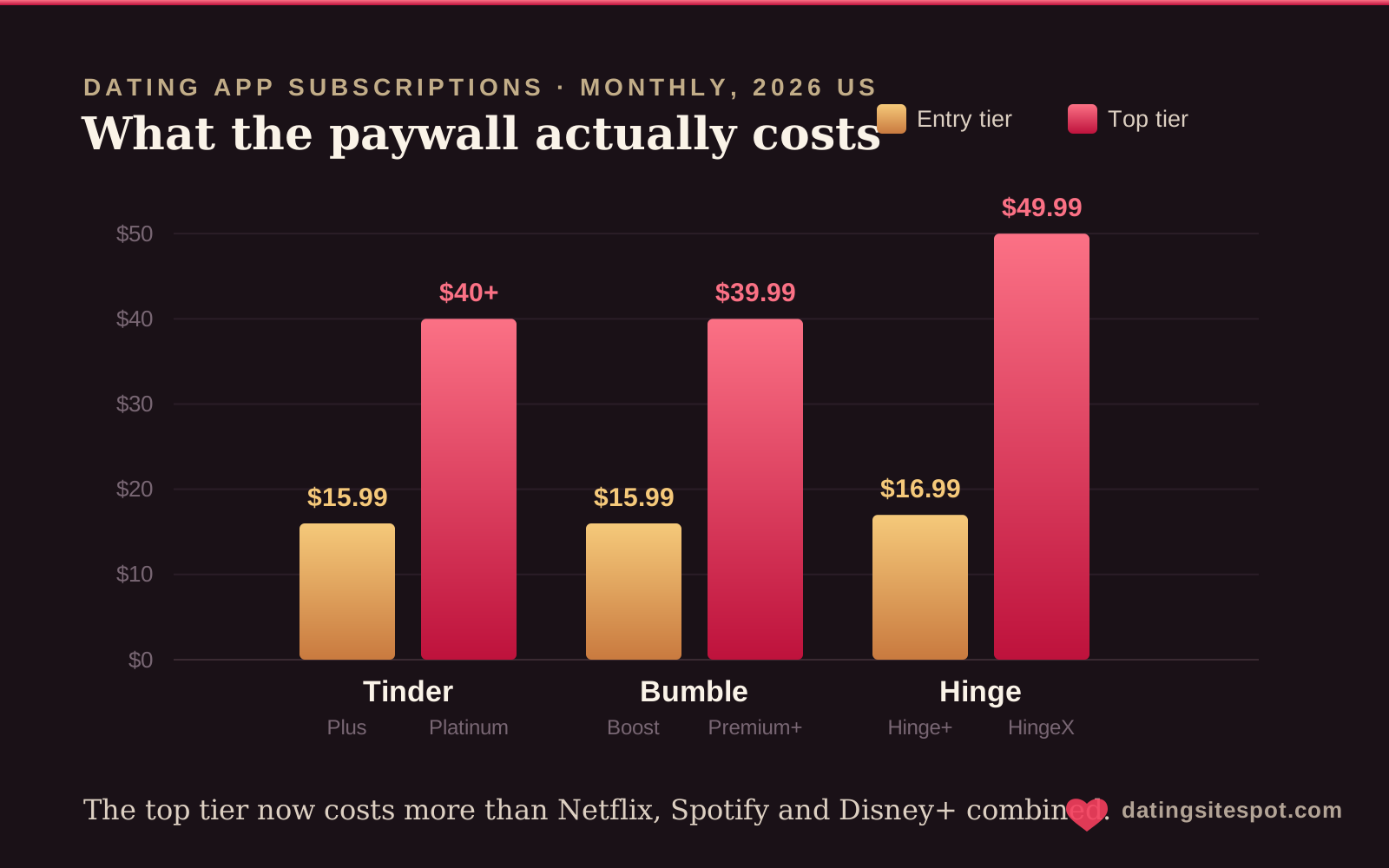 Entry premium clusters around $16/month; the top tier the apps actually push runs $40–$50/month.
Entry premium (the "cheap" tier):
- Tinder Plus / basic premium: about $15.99/month
- Bumble Boost: about $15.99/month
- Hinge+ : about $16.99/month
At the basic tier the three are within a dollar of each other — around $16/month, or roughly $192/year if you pay monthly for one app.
Top premium (the tier the apps actually push):
- HingeX: about $49.99/month — ~$600/year
- Bumble Premium+: about $39.99/month — ~$480/year
- Tinder Platinum: $40+/month — ~$480+/year
That top tier is the quiet story of 2026. As one analysis put it bluntly, the top tier of the dating-app paywall now costs more than Netflix, Spotify, and Disney+ combined — and none of it guarantees a single date.
The multi-app tax. Dating advice — and the apps' own marketing — nudges you to run several apps at once because "it's a numbers game." Stack a $16 Tinder, a $30 Bumble, and a $30 Hinge and you're at $65–$76 a month, or $780–$912 a year, just in subscriptions. That's a car payment to stay in the game.
The hidden fees nobody budgets for
The subscription is the honest line item. These are the ones that ambush people.
Auto-renewal after cancellation. In a review analysis of the lowest-rated dating-app subscriptions, post-cancellation charges were the single highest-volume complaint by a wide margin. The pattern repeats across every app: users cancel inside the app's own settings — which doesn't actually stop billing — instead of through the App Store or Google Play, and get charged anyway. "Canceled three days into the trial, charged the next day" is a genre of review at this point.
The "see who liked you" mirage. The most-marketed premium feature is also the most complained-about. Users who pay specifically to reveal their likes routinely report that a large share are bots, blank profiles, or accounts from far outside their distance filter. The perverse incentive is baked in: inflated like-counts drive premium conversions.
Refused refunds. When users notice an unwanted renewal and ask for a refund, in-app support frequently template-replies "subscriptions are non-refundable" — even where consumer law says otherwise. (Apple and Google will often refund at the store level, but the apps' support flows are built so you don't find that out.)
Profile photos. This one's optional but real: plenty of users pay $100–$500 for professional photos, because the data is brutal on this point. A University of Amsterdam study of 5,340 swiping decisions found that improving photo attractiveness pushed match rates from 25% to 43%, while bio improvements moved the needle about 2%. The app is the venue; your photos are the performance — and the performance has a price tag.
Adding it all up: one honest year
Here's a realistic year for someone who takes app dating seriously but isn't reckless — one app, mid-tier premium, one set of decent photos:
- Premium subscription (one app, about $16/mo): about $192
- One round of good profile photos: ~$200
- Cash total: ~$392 for the year
And for the "numbers game" dater running three apps at premium:
- Three subscriptions (about $65/mo): about $780
- Photos + the occasional boost pack: ~$300
- Cash total: ~$1,080 for the year
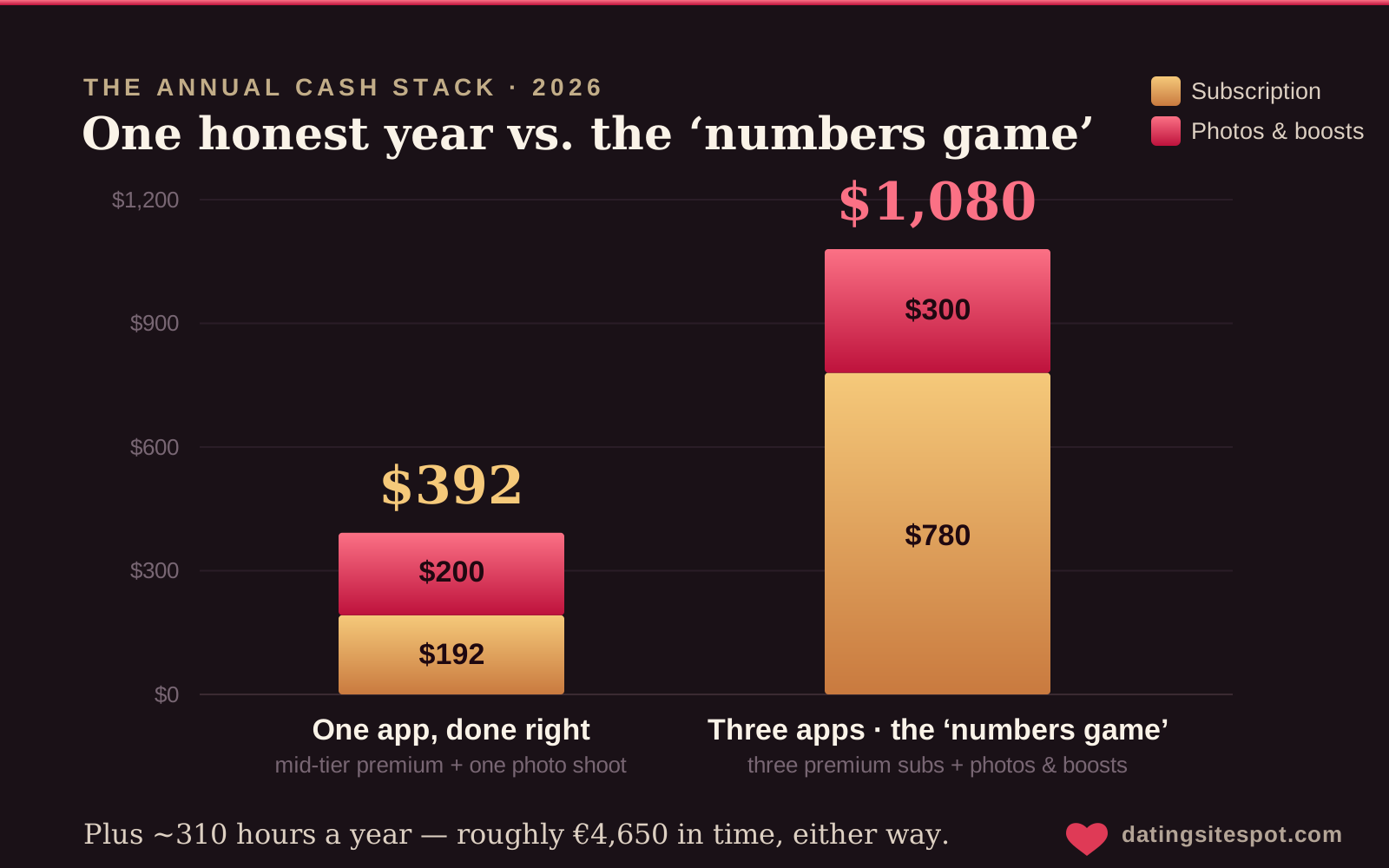 One app done right runs ~$392 a year; the three-app 'numbers game' runs ~$1,080 — and that's before the ~310 hours.
Then layer the 310 hours back on top of either number. Even at a modest €15/hour, that's the ~€4,650 in time we mentioned — which dwarfs every cash figure on the page. The subscription was never the expensive part.
Why the math looks like this (and it's not an accident)
Two structural facts explain the whole picture.
First, the business model rewards searching, not finding. Dating apps make money while you're still looking. Retention data makes the incentive obvious: dating apps are among the most-uninstalled app categories, with uninstall rates north of 60% for non-organic users, and fewer than 5% of monthly subscribers still active a year later. An app that helped you leave quickly would be a worse business. So the product is tuned to keep you swiping — which is exactly what turns 51 minutes a day into 310 hours a year.
Second, matching is easy; connecting is hard, and the apps only solve the easy half. They're extremely good at generating matches and far worse at turning them into real-world relationships. Roughly 74% of daters report being ghosted at least once (84% among Gen Z and Millennials), and about a quarter of matches end with no reply at all. The gap between "matched" and "met" is where the hours — and the frustration — pile up.
How to spend far less (and possibly do better)
The cheapest strategy is also, according to most of the data, a perfectly effective one:
- Run the free tiers of two or three apps for a month first. You're identifying which app actually generates matches in your area before you pay a cent. In smaller cities Tinder's larger user base wins; in others Hinge or Bumble will.
- If you upgrade, pay annually, not monthly. Annual plans run 40–60% cheaper per month (Hinge+ is roughly $8/mo annually versus ~$17 monthly).
- Never pay for more than one premium app at a time. The multi-app tax is the single biggest avoidable cost here.
- Cancel through the App Store or Google Play, never just inside the app, and screenshot the confirmation. This is how you avoid the auto-renewal trap.
- Spend on photos before you spend on boosts. The data says photo quality moves match rates ~10x more than anything a premium tier unlocks. A good profile on a free tier beats a weak profile with every upgrade switched on.
If you're going to invest anywhere, invest in the free-tier test and the photos. Almost everything else the paywall sells is optional.
Choosing which apps to actually test is its own rabbit hole — that's the ranked comparison we keep updated separately.
Methodology & sources
Pricing figures reflect typical 2026 US App Store pricing for users aged 25–35, verified against Hinge, Bumble, and Tinder store listings as of mid-2026; dating apps price-discriminate, so individual pricing varies. Usage figures (51 minutes/day, session lengths, login frequency) are drawn from Forbes Health, Statista, and Business of Apps. Ghosting and uninstall figures are from BankMyCell, AppsFlyer, and Business of Apps benchmarks. The photo/match-rate finding is from the University of Amsterdam swiping study (Witmer, Rosenbusch & Meral, 2025). Time-cost calculations are our own, based on the 51-minutes-per-day average.
Last updated: July 2, 2026.