How we tested Badoo
We score Badoo across experience, value, audience and safety, then compare it against the category where it actually competes.
- Free-tier checked
- Audience fit reviewed
- Ranking cross-checked
Screenshot
What Badoo actually looks like.
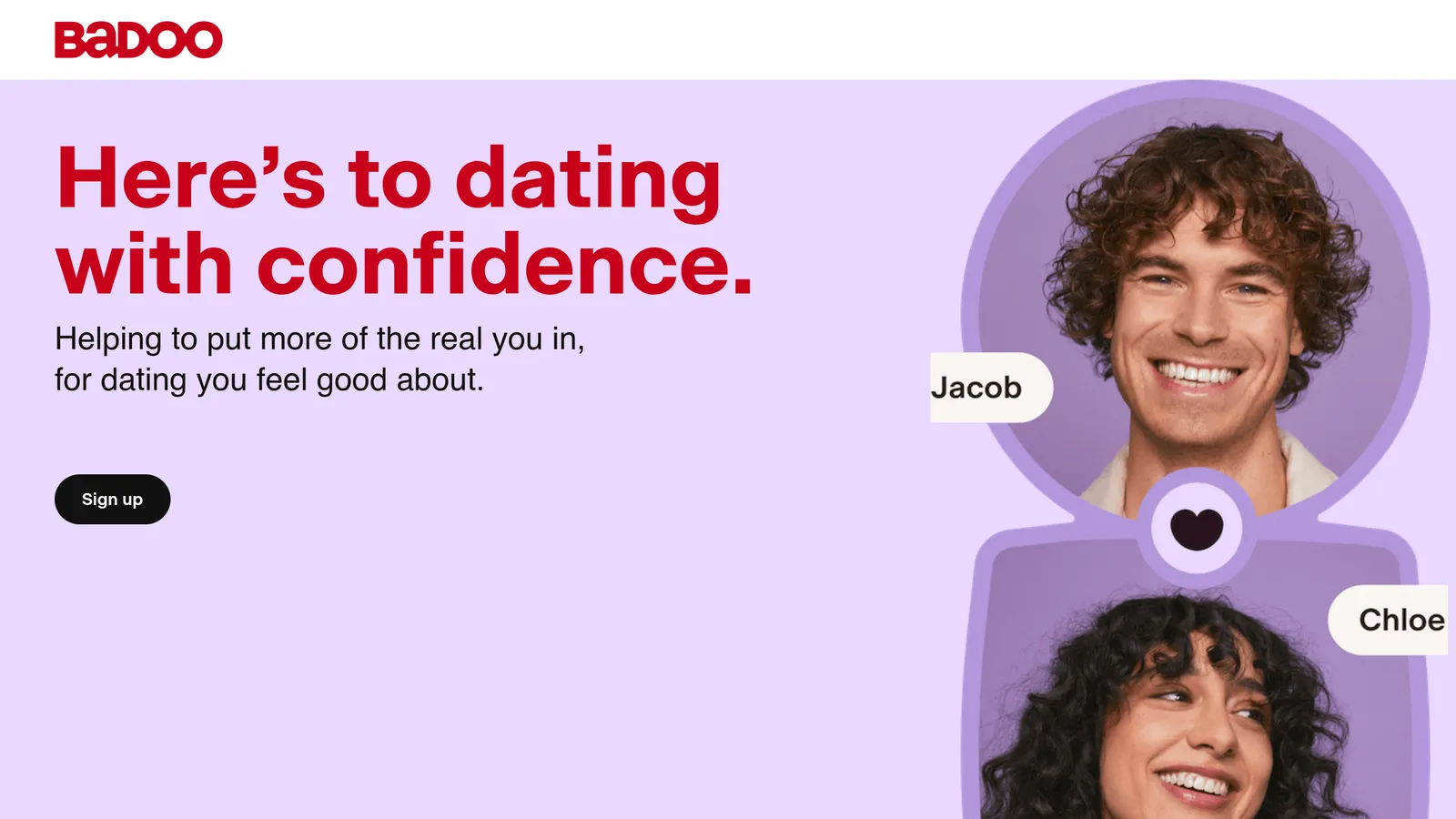
Badoo is the dating app whose quality depends almost entirely on where you open it. It's the biggest swipe-and-discover product built outside the US, with real daily traffic across Latin America and chunks of continental Europe — and the same app that feels alive in Madrid or São Paulo can feel half-empty in Chicago. More than anything else here, your postcode decides whether Badoo is any good.
Who it's for
Badoo makes sense if you live in or pass through a market where its crowd is thick — Spain, Italy, France, Brazil, Mexico, Russia and Eastern Europe especially — and you want a discovery-led app rather than a curated, commitment-first one. If you're a US-based English speaker hunting for a default, Tinder, Bumble and Hinge are stronger. And if your goal is a serious relationship, none of the discovery apps belong on your list, this one included.
What it does well
Reach abroad is the genuine strength. In markets where Tinder and Bumble exist but play second fiddle, Badoo's feed is denser and reflects the local crowd instead of a thin expat layer — we saw that most clearly in Latin American and continental-European testing, and least in the US. The discovery surfaces are the structural difference: People Nearby and Encounters are built for broad social discovery rather than a tight dating funnel, and the audience treats them that way, which suits travellers, language exchange, or anyone using it as a wider social app. There are real trust signals, too — photo verification, in-app moderation and a long operating history put it above the smaller regional discovery apps in the same markets, even if it never reaches mainstream-US standards.
Where it slips
Quality swings hard by city — dense-metro Madrid or São Paulo behaves nothing like Chicago or Manchester, so we weighted the score toward the markets where the crowd holds up, and even there the match quality sits below the Match-family products. The free tier is among the most heavily metered of any app here outside Tinder: daily Encounters limits, visibility throttles, credit packs and Premium prompts crowd the free flows, so it's fine for a look but not a steady state. And the intent skews casual at best — relationship-minded daters will find the feed thinner than Bumble or Hinge at the same address. Badoo doesn't pretend otherwise; it's marketed itself as discovery-led for the entire decade we've followed it.
What you'd pay for
Badoo Premium (tiered by term) plus one-off credit packs for boosts and visibility make up the paid surface. In a thin market we wouldn't pay for an evaluation run; in a dense one, the free tier is already a reasonable way to judge the crowd.
The bottom line
Badoo belongs on the dating-apps and casual shortlists for its international reach and a discovery model that genuinely fits its audience. It stays off the overall, serious-relationships, free and over-40 lists — geo swings, a casual lean and a heavy upsell stack keep it behind the mainstream picks for a US-led English-speaking reader.
Strengths & weaknesses
The honest balance sheet.
What works
- International reach is genuinely broad — Badoo holds up in parts of Europe and Latin America where US-led mainstream products thin out
- Discovery-led "People Nearby" and Encounters surfaces work for raw social discovery rather than pure dating intent, which fits the audience
- Photo verification and a long-running moderation surface make it more credible than smaller regional discovery apps in similar markets
What doesn't
- Audience quality swings sharply by geography — the same product in different cities is effectively a different experience, and dense-metro US results were the weakest in our tests
- The free tier is metered by daily Encounters, message limits and a heavy upsell surface that funnels toward Premium and credit packs in most flows
- Less serious than its mainstream peers — relationship intent is the minority signal in the recommended-matches feed, even where the audience is large
Who should use it
Use Badoo if any of this is you.
- You want low-friction matching with minimal onboarding.
Who should skip it
Skip Badoo if any of this is you.
- You're dating in the 50+ bracket and want age-matched pools.
- Faith alignment is a hard filter for you.
Pricing reality check
Editorial coverageNo affiliate payout is attached to this review.
We cover this brand editorially. There is no sponsored link, no commission, and no paid placement on this page.
- Free tier
- Yes
- Messaging access
- Free tier with paid upgrades
- Upgrade pressure
- Moderate
Editor’s alternatives
Three reviews to read before you commit to Badoo.
Picked from sites that share the same audience and category placements as Badoo. No paid placements.
Bumble7.2/10
A mainstream app-first product with the most honest free start in our coverage and a women-message-first dynamic that sharpens reply quality — at the cost of pace, upsells and a weak web experience.
Shares: best-casual-dating-sites, best-dating-apps
Read reviewFeeld6.2/10
A coherent open-minded dating app for non-monogamous and curious adults — strong fit inside its niche, the wrong recommendation for anyone shopping for a traditional mainstream pool.
Shares: best-casual-dating-sites, best-dating-apps
Read reviewTinder6.0/10
The biggest mainstream swipe pool by a wide margin — useful for casual discovery, weak on signal, and increasingly metered by paid tiers that turn the free experience into a preview.
Shares: best-casual-dating-sites, best-dating-apps
Read review
Read on
How Badoo fits the rest of our coverage.
Pulled from the live content graph: editor-tested intents this product plausibly fits, and head-to-heads against brands we already rank.
Best for
Casual dating
Lower-friction matching without commitment-first framing.
Hookups
Low-commitment, high-velocity matching. We surface the products designed for it without recommending sites we haven't tested.
Introvert dating
Slower-paced, lower-volume products built around prompts, curated matches, and async messaging.
Women-first dating
Apps where women send the first message in opposite-sex matches by design.
Compared with
FAQ
Frequently asked questions about Badoo.
Generated from this review’s scoring + your-actually-asked questions. No invented numbers.
- Is Badoo worth it?
- Our editor scored Badoo 5.8/10. A global discovery-led mainstream app with strong international reach and uneven local quality — useful in markets where its audience is dense, weaker as a default for US-led English-language readers.
- Is Badoo free?
- Partially — there's a free tier, but key features (typically messaging) sit behind a paid plan.
- Who is Badoo best for?
- Badoo is best for casual daters who want low-friction matching.
- What is the biggest downside of Badoo?
- By the numbers, Badoo scores lowest on value for the money (5.4/10) — that's the trade-off to weigh first. The strengths-and-weaknesses breakdown above lays out the specifics.
- What is the best alternative to Badoo?
- If Badoo doesn't fit, we'd start with Bumble — see /sites/bumble/.
Where this also appears
Badoo is ranked in 2 other lists.
Same review, scored against different lists. Each link below is the editorial ranking for that audience or use case.
Reviewed by
DatingSiteSpot Editorial
Independent review team · DatingSiteSpot
The DatingSiteSpot editorial team has reviewed dating and adult platforms since 2014. Every verdict comes from first-hand testing on accounts we create and pay for ourselves — no press kits, no stock screenshots, no AI mockups, no sponsored placements.
Methods · Dating app testing · Editorial reviews · Consumer comparison
Editorial review protocol
Read methodology →UX
tested signup → first match
Value
free tier vs paid wall
Audience
pool quality + fit
Safety
privacy + abuse signals
Score
overall on 10
Reviewed against the active 23-site category — every site we cover is scored on the same five axes.
Author focus
- Usability
- Pricing transparency
- Audience fit
- Privacy signals
Method · Five-axis rubric application · Paid-flow testing · Onboarding friction analysis · Cancellation flow documentation
- Reviewed
- · refreshed when the review or pricing changes
- Corrections
- [email protected]
Editorial protocol
- Reviewed using the same 5-axis rubric as every ranking.
- Corrections reviewed manually — no auto-publish.
- Affiliate relationships do not change the score (editorial policy).
- Tested on a real account — see how we test.