Dating • Data study
AI Girlfriend vs Dating Apps: What the Data Says
It reads like a versus, but the data says it isn't. Dating apps sell access to a search; AI companions sell the feeling of having already found someone. The AI girlfriend is not the cheap escape it's marketed as, and it doesn't save your hours — it takes more of them. Here's the money, the time, and the research on what each one actually delivers.
TL;DR — Key takeaways
- One in five men on dating apps has already tried an AI girlfriend — and the alternative holds attention almost twice as long: ~92 minutes a day vs. ~51 for swiping.
- The 'cheap AI girlfriend' is a myth at the top end. Entry plans start near $6/mo, but users who pay for premium features average ~$47/mo — more than a three-app dating stack's basic tiers.
- AI doesn't save time, it takes more of it. Annualized, an AI companion runs ~560 hours a year vs. ~310 for dating apps — about 23 days against 13.
- It's a fork, not a versus. If you want a human relationship, use one dating app well (free tier, good photos). If you want companionship tonight, that's the demand AI is actually absorbing.
Two numbers explain why this comparison exists.
The average dating-app user spends about 51 minutes a day swiping — roughly 310 hours a year, most of it producing matches that go nowhere. Meanwhile, one in five men on dating apps has already tried an AI girlfriend app at least once. The exodus isn't hypothetical; it's a measurable migration between two products that claim to solve the same problem.
So we did what we did for the true cost of dating apps: pulled the numbers on both sides — money, time, retention, and what the research says each one actually delivers — and put them next to each other. The result is messier than either camp wants it to be. The AI girlfriend is not the cheap escape it's marketed as, and the dating app is not the path to a relationship most subscribers think they're paying for.
The head-to-head, in one table
| Dating apps | AI girlfriend apps | |
|---|---|---|
| Typical paid tier | about $16/mo (basic) to $50/mo (top) | about $6/mo to $20/mo |
| What heavy spenders pay | $65–76/mo across 3 apps | ~$47/mo average on premium features |
| Realistic cash year | $392–$1,080 | $0 (free tiers) to $564+ |
| Time per day | ≈51 minutes | ≈92 minutes (Character.AI average) |
| Daily-use rate | opens ~4×/day (Tinder actives) | 55% of users interact daily |
| One-year retention | fewer than 5% of subscribers still active | high engagement, but category too young for clean data |
| What you're buying | access to a search pool | the simulation of having already found someone |
| Documented downside | 74% report being ghosted; 60%+ uninstall within a year | privacy record: breaches, FTC scrutiny |
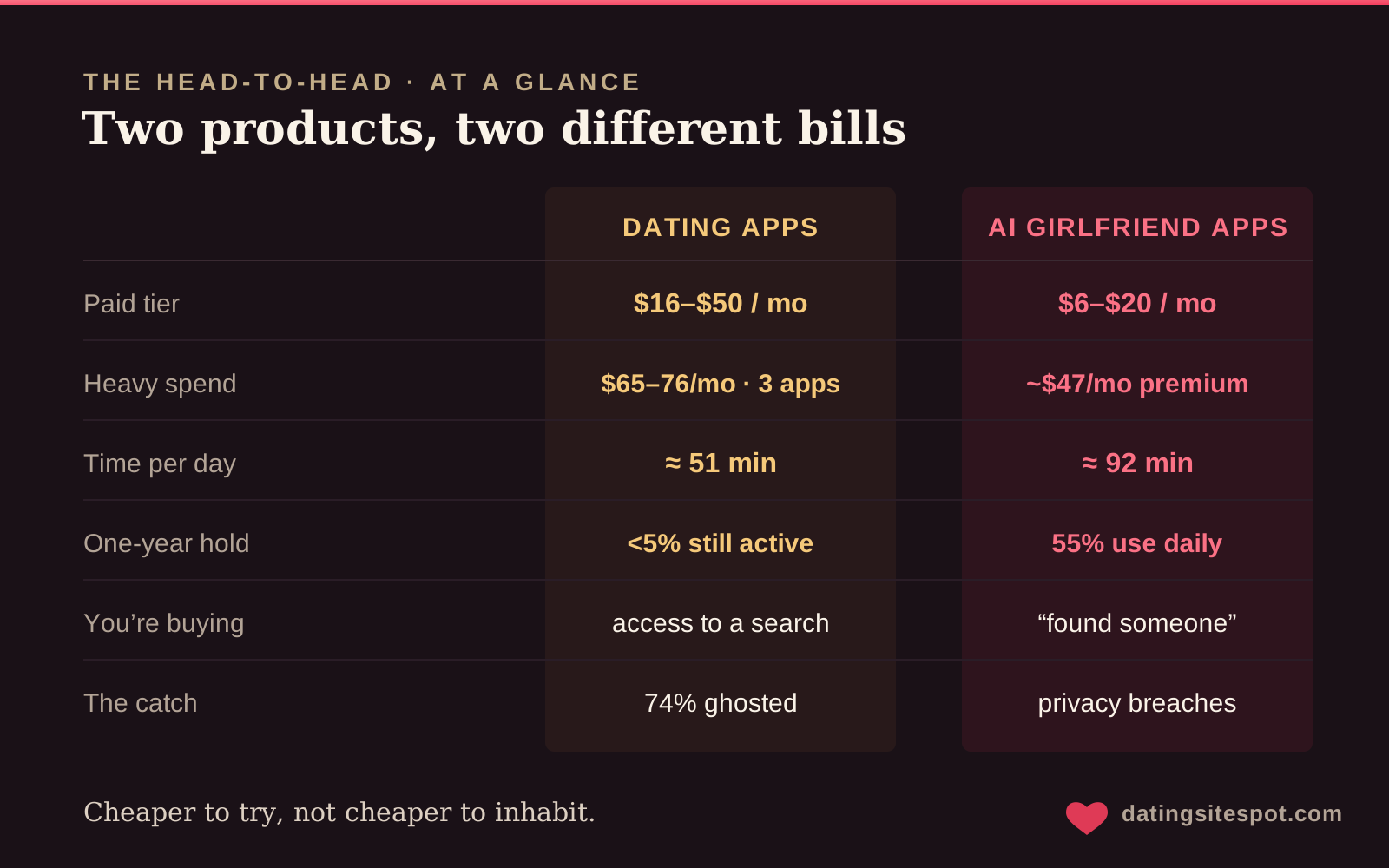 The head-to-head at a glance: cheaper to try but not cheaper to inhabit, and a deeper attention product than the thing it replaces.
Every figure is sourced in the methodology section. Two of them deserve a closer look, because they break the popular narrative in both directions.
The money: the "cheap AI girlfriend" is a myth at the top end
The entry math favors AI, clearly. Solid AI companion apps run genuinely usable free tiers, and paid plans start around $5.99 a month on annual billing — against roughly $16/month for the cheapest premium tier on Tinder, Bumble, or Hinge, and $40–50/month for the top tiers that, as we calculated, now cost more than Netflix, Spotify, and Disney+ combined.
But the spending curve doesn't stop at the subscription. Across the category, users who pay for premium AI-companion features average about $47 a month once character customization, image generation, and message packs stack up — more than a three-app dating stack's basic tiers, and enough to make the "it's just five bucks" framing dishonest. The freemium engine is doing exactly what freemium engines do: roughly a quarter of users convert to paid, and the ones who convert keep buying.
So the honest cost verdict: AI is cheaper to try, not necessarily cheaper to inhabit. A disciplined user spends less on an AI companion than on one dating app. An undisciplined one spends more than a three-app "numbers game" year — without ever meeting anyone.
The time: AI doesn't save your hours. It takes more of them.
This is the number that surprised us. The pitch for AI companionship is efficiency — no dead-end conversations, no ghosting, no 310 hours a year of swiping. The engagement data says the opposite.
Character.AI users average around 92 minutes a day in-app — nearly double the dating-app average of 51 minutes, and longer than typical daily use of TikTok or Instagram. Across AI girlfriend platforms, 55% of users interact with their companion every single day, and usage has no off-peak: these apps get opened at 3 a.m., during insomnia and emotional lows, in exactly the hours dating apps go quiet.
Run the same annualization we ran for dating apps and the picture inverts: 92 minutes a day is roughly 560 hours a year — about 23 full days, or nearly double the 13 days a year the average swiper spends. Whatever an AI girlfriend is, it is not a time-saver. It's a deeper attention product than the thing it replaces.
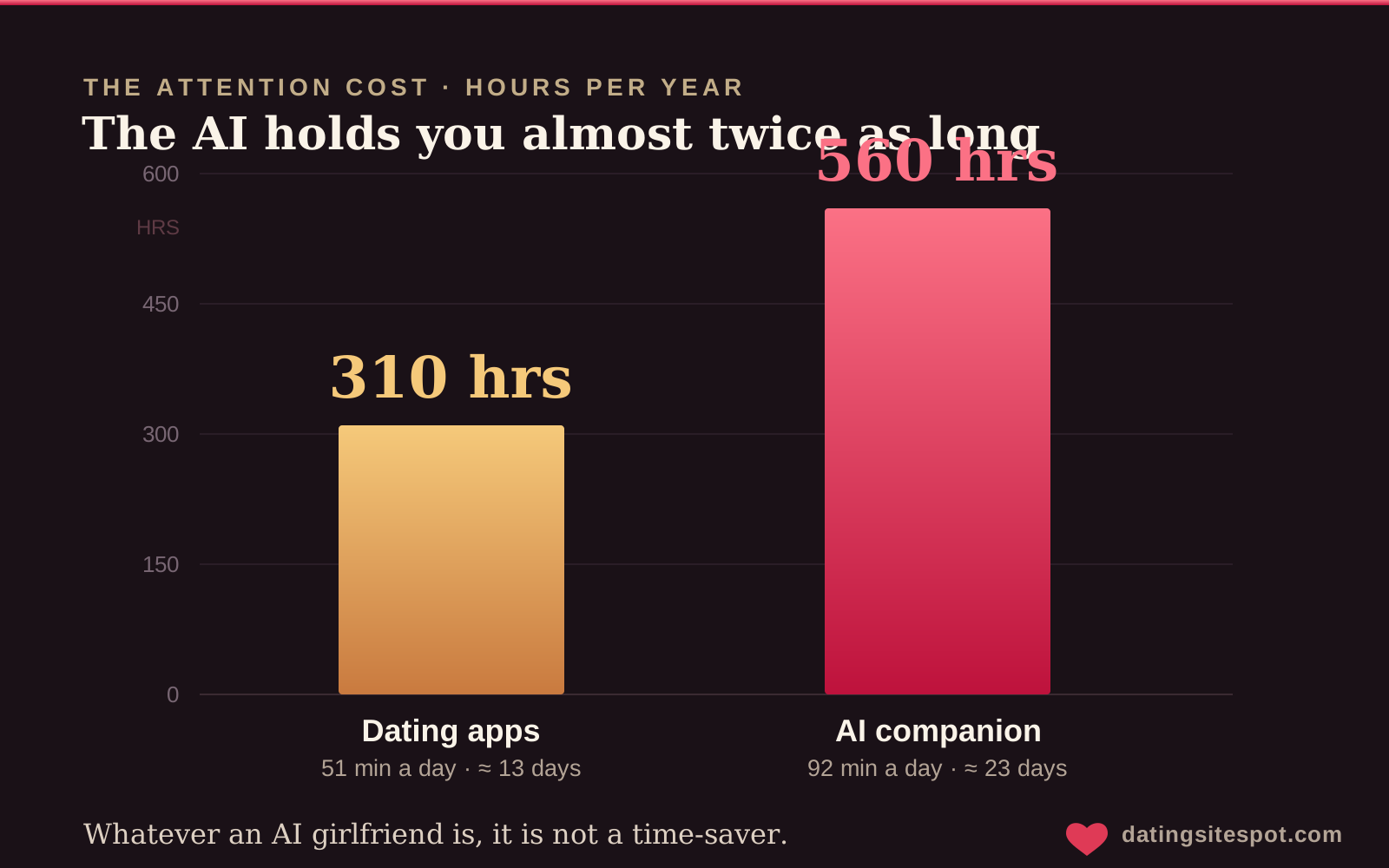 51 minutes a day is ~310 hours a year; 92 minutes a day is ~560 — about 23 days against 13.
What each one actually delivers
Strip the marketing and the two products sell different outcomes.
Dating apps sell access to a search. They're good at generating matches and bad at converting them: 74% of daters report being ghosted, about a quarter of matches end in silence, and the retention numbers are brutal — over 60% of users uninstall within a year, and fewer than 5% of monthly subscribers are still active twelve months later. The product's incentive is the search continuing, not ending. That's not a conspiracy theory; it's the business model, and it's why the apps are tuned the way they are.
AI companions sell the feeling of having already found someone. And the early research says the feeling is partially real: a randomized controlled trial out of Harvard Business School (De Freitas, 2024) found AI companions modestly reduce loneliness, especially through voice interaction. Surveys of users are consistent about why they're there — loneliness is the primary driver for the large majority, with some platform studies putting it near 87%. In an IFS/YouGov survey of 2,000 adults, 25% of young adults said they believe AI partners could plausibly replace real-life romance.
There's a demographic backdrop that explains a lot of this: 63% of men under 30 describe themselves as single, versus 34% of women in the same bracket. The dating market those men experience is the one where a small share of profiles absorbs most of the attention. An always-available companion that never leaves you on read is not competing with a great relationship. It's competing with silence.
The catches, both directions
The AI side has a privacy record that should give anyone pause. These apps hold the most intimate conversations their users have ever typed, and the category's security track record is poor — including a 2024 breach at one companion platform that exposed roughly 1.9 million records, and FTC information orders sent to several AI-companion companies in late 2025. We went deep on which platforms handle this better and worse in our ranked review of AI girlfriend apps; the short version is that the gap between the careful operators and the careless ones is enormous, and most users can't tell them apart from the landing page.
The dating-app side has the churn problem it never solved. You are statistically likely to be ghosted, likely to uninstall within the year, and — if you pay for the tier that promises to fix it — likely to discover the paywall changes the interface more than the outcome. The single highest-leverage improvement remains free: profile photo quality moves match rates from 25% to 43% in controlled swiping research, roughly ten times the effect of anything a premium tier unlocks.
The verdict: it's not a versus. It's a fork.
The framing "AI girlfriend vs dating apps" assumes they're substitutes. The data says they're diverging products for diverging needs.
If the goal is a human relationship, the dating app — for all its extraction — is still the tool, and the data-backed way to use it is the boring one: one app, free tier first, good photos, and a hard look at what a year actually costs before paying for anything. If the need is companionship tonight — the 3 a.m. hours, the no-judgment space — that's the demand AI companions are actually absorbing, and pretending it's illegitimate hasn't slowed a market growing at 25% a year toward $2.9 billion in 2026, with searches up 2,400% in two years.
The uncomfortable summary for both industries: one in five men has now tried the alternative, and the alternative holds attention almost twice as long. Dating apps are not losing users to better dating apps. They're losing hours to a product that made the search optional.
Methodology & sources
Dating-app figures (usage minutes, pricing tiers, ghosting, uninstall and subscriber-retention rates, photo/match-rate research) are drawn from our companion study, The True Cost of Dating Apps, which sources Forbes Health, Statista, Business of Apps, BankMyCell, AppsFlyer, and the University of Amsterdam swiping study. AI-companion figures: market size and growth from The Business Research Company (2026); search-trend growth (≈2,400%, 2022–2024) from TRG Datacenters/Ahrefs analytics; daily-use share (55%) and average premium spending (≈$47/month) from TRG Datacenters and What's the Big Data; Character.AI session length (≈92 minutes) from Appfigures/TechCrunch app analytics; the one-in-five-men figure from multi-source 2025 platform surveys; loneliness-driver shares from platform research aggregators; the loneliness RCT is De Freitas et al., Harvard Business School (2024); the 25%-of-young-adults figure is from an IFS/YouGov survey (n=2,000); the singleness gap (63% vs 34% under 30) reflects widely cited Pew Research data; the 2024 companion-platform breach (~1.9M records) is documented via Have I Been Pwned and security press; FTC information orders reported late 2025. Where sources conflicted, we used the most recent methodologically transparent figure and rounded conservatively. Time-cost annualizations are our own.
Last updated: July 2, 2026.